
A Practical Way to Track Spending and Eliminate Waste
I am so tired of seeing those “aesthetic” finance influencers post videos of their color-coded spreadsheets and $20 monthly subscriptions to fancy budgeting apps. It feels like they’re selling a lifestyle of perfection that nobody actually has time for. Let’s be real: most of those complex systems fall apart the second you have a bad week or a surprise car repair. If you’re staring at your bank account wondering where that last $100 went, you don’t need a high-tech dashboard; you just need to figure out how to track your spending in a way that doesn’t feel like a second full-time job.
I’m not going to give you a lecture on deprivation or suggest you download every shiny new tool on the App Store. Instead, I want to share the messy, functional systems I’ve built over the years to keep my freelance income from vanishing into thin air. We’re going to focus on low-friction methods that actually stick when life gets chaotic. My goal is to help you find a rhythm that works for your real life, not some curated version of it, so you can finally stop guessing and start feeling in control.
Ditch the Complex Apps for Simple Tracking Daily Expenses

Look, I get it. You download one of those high-end personal finance management tools that promises to automate your entire life, and for the first three days, you feel like a total boss. Then, life happens. You miss a day, the notifications start feeling like nagging chores, and suddenly you’ve abandoned the app entirely. We’ve all been there. The problem isn’t your willpower; it’s that most of these tools are built for perfection, not for real life.
If you’re just starting out, please stop trying to build a complex financial empire. Instead, focus on building financial awareness habits that actually stick. For me, that meant ditching the fancy interfaces and just keeping a running note on my phone or a tiny notebook in my bag. The goal isn’t to categorize every single cent into a sub-folder; it’s simply about tracking daily expenses as they happen so you aren’t staring at a mountain of mystery transactions at the end of the month. Whether it’s a basic list or a very stripped-back monthly budget spreadsheet, the best system is the one you won’t feel guilty about skipping when you’re having a busy Tuesday.
Building Financial Awareness Habits That Actually Stick

The biggest mistake I see people make is trying to overhaul their entire life in a single weekend. You sit down, download every high-tech app available, and try to categorize every cent you’ve spent since 2019. By Tuesday, you’re burnt out and back to square one. Real financial awareness habits aren’t built on intensity; they’re built on consistency. It’s much better to spend two minutes every evening glancing at your bank balance than to spend four hours on a Sunday morning trying to reconcile a massive, overwhelming list of transactions.
If you’re looking for budgeting methods for beginners, my best advice is to start where you are, not where an influencer says you “should” be. You don’t need a complex, color-coded system to understand where your money is going. Maybe it’s just a quick note in your phone or a simple scribble in a notebook. The goal isn’t to achieve perfection; it’s to stop the bleeding by simply noticing the patterns. When you start seeing that $7 latte isn’t just a treat, but a recurring line item that affects your ability to save, that’s when the real shift happens. Focus on the small wins, and let the rest follow.
Five ways to keep your spending on track without losing your mind
- Stop trying to categorize every single cent. If you’re spending ten minutes debating whether a coffee counts as “entertainment” or “sustenance,” you’re going to quit by Tuesday. Just group things into big, messy buckets like “Needs,” “Wants,” and “Everything Else” so you can actually see the big picture.
- Pick a “low-friction” method. If you hate typing into a spreadsheet, don’t force yourself to use one. Use a physical notebook, a simple note on your phone, or even just a dedicated group chat with yourself. The best system is the one you’ll actually use when you’re tired and just want to crash on the couch.
- Schedule a weekly “money check-in” that feels less like an audit and more like a reset. Spend fifteen minutes every Sunday looking at what went out. It’s not about judging yourself for that takeout order; it’s just about seeing where the money went so you can make better calls next week.
- Look for the “invisible” leaks. It’s rarely the big purchases that wreck a budget; it’s the $12 subscriptions you forgot to cancel and the convenience fees that add up. Once a month, scan your bank statement specifically for those tiny, recurring drains that don’t actually bring you any joy.
- Give yourself some breathing room. If your tracking system is too rigid, you’ll view every small purchase as a failure. Build in a “buffer” category for the unexpected stuff—the broken toaster or the last-minute birthday gift—so a single unplanned expense doesn’t derail your entire month.
The bottom line
Stop hunting for the “perfect” app; if a tool feels like a chore, you won’t use it, so pick the simplest method that actually fits into your day.
Focus on consistency over precision—it’s better to have a rough idea of where your money is going than a perfect spreadsheet that you abandoned three days ago.
Build systems that survive a bad day, because a budget that only works when you’re feeling organized isn’t a budget, it’s a wish.
## The truth about the numbers
“Stop trying to build a masterpiece of a spreadsheet that you’ll abandon by Tuesday. Tracking your spending isn’t about achieving perfect mathematical precision; it’s about catching the leaks in your boat before you start sinking.”
Nadia Halloway
Just keep it moving
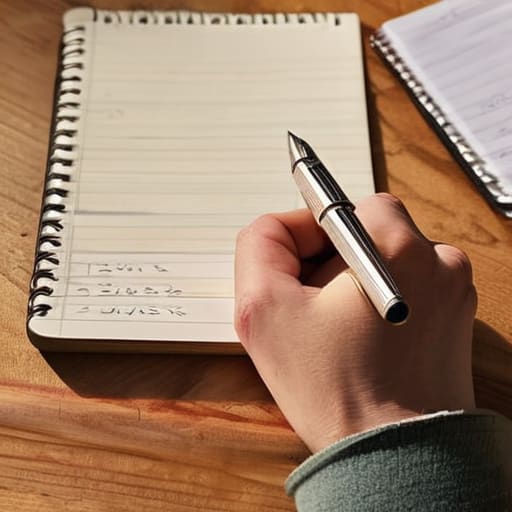
Look, we’ve covered a lot, but if you forget everything else, just remember this: you don’t need a PhD in finance or a subscription to some overpriced, shiny app to get a handle on your money. Whether you’re scribbling numbers in a beat-up notebook or just using a basic notes app on your phone, the goal is simply to stop the bleeding. By ditching the complex tools and focusing on small, repeatable habits, you’re building a foundation that won’t crumble the second your week gets chaotic. It’s about consistency over complexity, every single time.
At the end of the day, tracking your spending isn’t about punishing yourself for that extra latte or a spontaneous thrift store find. It’s about gaining enough clarity to make sure your money is actually going toward the things that matter to you. Life is messy, and your budget will be too, and that is perfectly okay. Don’t let the pursuit of a “perfect” system stop you from starting. Just pick a method that feels low-friction, start today, and remember that progress is better than perfection.
Frequently Asked Questions
What do I do if I forget to log a few days of spending?
Look, I’ve been there. You miss three days, then a week, and suddenly you feel like you’ve failed the whole system. Stop right there. Don’t try to play detective and hunt down every single receipt from Tuesday—it’s a waste of energy and it’ll just burn you out. Just take a deep breath, guess an estimate if you have to, and start fresh from today. The goal is consistency, not perfection.
Is it better to track every single cent or just the big stuff?
Honestly? If you try to track every single cent, you’ll probably burn out by Tuesday. I’ve been there, and it’s exhausting. For most of us, the goal isn’t mathematical perfection; it’s awareness. I recommend focusing on the “big rocks”—rent, groceries, subscriptions—and then grouping the small stuff into a “miscellaneous” bucket. If you can see where the bulk of your money is going, you’ve already won half the battle.
How do I handle irregular expenses like car repairs or annual subscriptions?
These are the “budget killers” that always seem to pop up right when you feel like you’re winning. My trick? Stop treating them like surprises. I use a “sinking fund” approach. I look at my annual subscriptions or those inevitable car maintenance costs and divide them by twelve. Then, I set up a separate, boring savings bucket and automate that small amount every month. It’s not glamorous, but it beats the panic when the mechanic calls.
At what point does tracking my money start to feel more like a chore than a helpful habit?
It starts feeling like a chore the second you prioritize the “perfect” entry over the actual insight. If you’re spending twenty minutes hunting for a lost receipt or stressing over a $4 coffee that didn’t fit a specific category, you’ve crossed the line from tracking to obsessing. When the system requires more energy than the clarity it provides, it’s broken. If it feels heavy, simplify the categories. The goal is awareness, not accounting.