
The Power of Keystone Habits to Change Your Life
I spent three years watching “productivity gurus” on YouTube try to sell me on $50 planners and complex morning routines that required waking up at 4:00 AM. It felt like they were trying to sell me a lifestyle of perfection that I simply couldn’t afford—not in time, and certainly not in mental energy. The truth is, most of that “optimization” nonsense is just expensive noise. We don’t need a complete life overhaul; we need keystone habits. These aren’t those massive, sweeping changes that fall apart the second your kid gets sick or your laptop dies; they are the tiny, stubborn anchors that keep your entire day from drifting into chaos.
I’m not here to give you a curated list of aesthetic rituals that look great in a filtered photo but fail in real life. Instead, I want to share the unsexy, repeatable systems that actually work when things get messy. We’re going to strip away the jargon and focus on the small wins that create real momentum. My goal is to help you find those few high-leverage actions that make everything else feel a little bit more manageable, even on your worst days.
Decoding the Habit Loop Mechanism Without the Fluff

Look, I know “behavioral change psychology” sounds like something you’d only hear in a stuffy lecture hall, but it’s actually pretty simple once you strip away the academic jargon. At its core, everything we do follows a basic habit loop mechanism: a cue, a craving, a response, and a reward. Think of it like my morning coffee ritual. The smell of the beans (the cue) triggers a desire for that caffeine kick (the craving), so I brew the pot (the response), and finally, that first warm sip hits (the reward). When you understand this loop, you stop fighting your brain and start working with it.
The trick isn’t about willpower—willpower is a finite resource that fails the second you have a stressful Tuesday. Instead, it’s about triggering positive routines by hacking those cues. If you want to start reading more, don’t just tell yourself to “be a reader.” Put a book on your pillow every morning. You’re essentially setting up a breadcrumb trail for your future, slightly exhausted self to follow. This is how you move away from those grand, unsustainable gestures and toward something that actually sticks when life gets loud.
Using Behavioral Change Psychology for Real Life Messiness
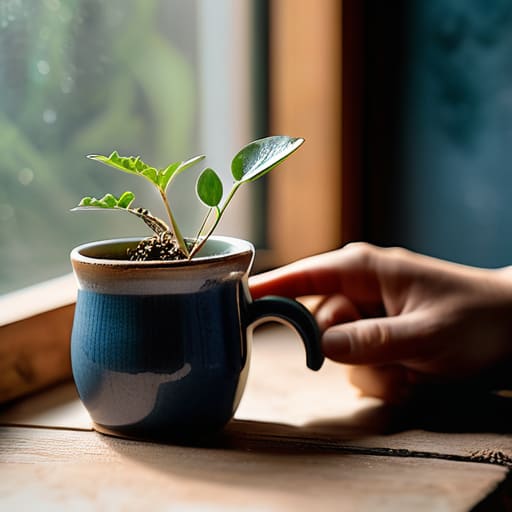
Look, we’ve all seen those influencers who make personal growth look like a choreographed dance in a perfectly sunlit studio. It’s exhausting. In reality, change is clunky. To make anything stick, you have to lean into a bit of behavioral change psychology without getting lost in a textbook. The trick isn’t to find more willpower; it’s to stop fighting your own brain. Instead of trying to force a massive lifestyle shift, focus on identity-based habits. Don’t tell yourself you’re “trying to wake up earlier”; tell yourself you’re the kind of person who prioritizes a calm morning. When you shift the focus from what you do to who you are, the actions start to feel less like chores and more like natural extensions of yourself.
This is where the compounding effect of habits really kicks in. You don’t need a revolution; you just need small, incremental wins that stack up over time. Think of it like restoring one of my thrifted mid-century chairs—you don’t sand the whole thing down in one go, or you’ll lose your mind. You do one section at a time. By focusing on tiny, manageable adjustments, you create a foundation that actually survives a bad day or a chaotic week.
Five Low-Stakes Ways to Actually Start
- Stop looking for the “perfect” habit and just pick something that takes less than five minutes. If you try to commit to a 60-minute morning routine on day one, you’re going to quit by Tuesday when life inevitably gets in the way. Start with something so small it feels almost silly—like clearing your desk before you close your laptop for the night.
- Anchor your new habit to something you already do without thinking. I call this “habit stacking,” but let’s just call it common sense. If you want to start a daily budget check, do it while your morning coffee is brewing. Don’t try to build a new routine in a vacuum; hitch it to an existing one.
- Design your environment to do the heavy lifting for you. If you want to eat better, don’t rely on willpower—that’s a finite resource that runs out by 4 PM. If you want to focus, put your phone in a different room. Make the good habits easy to stumble into and the bad ones a bit of a chore.
- Forget about “all or nothing” thinking. If you miss a day, don’t throw the whole system out the window. I used to think that if I didn’t hit my goals perfectly, I had failed. Now, I just aim for “never miss twice.” One messy day doesn’t ruin a system; quitting does.
- Track your progress, but keep it low-tech. You don’t need a complex, subscription-based app with color-coded widgets to see if you’re succeeding. A simple paper habit tracker or even just a few marks on a physical calendar is enough. If the tracking system feels like a chore, you won’t do it.
The Bottom Line: Small Wins Over Big Overhauls
Stop trying to “optimize” your entire existence in a single weekend; focus on one tiny, repeatable action that you can actually maintain even when your week goes sideways.
Use the habit loop to your advantage by making the “cue” so obvious you can’t miss it, and the “reward” something that actually feels good, not some arbitrary gold star.
Build systems for your messiest days, not your best ones—a habit is only useful if it survives a bad night’s sleep or a mounting pile of laundry.
The Truth About Big Changes
Stop waiting for a massive burst of motivation to overhaul your entire life. Real change isn’t about those grand, cinematic transformations; it’s about finding that one tiny, boringly consistent habit that acts as an anchor when everything else feels like it’s falling apart.
Nadia Halloway
Stop Chasing Perfection, Start Building Systems

Look, we’ve covered a lot of ground, from the actual mechanics of how your brain loops through habits to how you can apply that psychology when your life feels like it’s falling apart. The takeaway isn’t that you need to master every single aspect of your routine by Monday morning. It’s about identifying those few, tiny keystone habits—the ones that, when they click, make everything else feel just a little bit lighter. Whether it’s finally sticking to a consistent morning ritual or just managing your budget with a simple, repeatable system, remember that consistency beats intensity every single time. You don’t need a total life overhaul; you just need small, sustainable wins that hold steady when things get messy.
At the end of the day, I want you to give yourself some grace. There will be days when your systems fail, your routine goes out the window, and you feel like you’ve backslid. That’s okay. That is part of being human. The goal isn’t to become a productivity robot; it’s to build a foundation that supports the life you actually want to live, not the one you see on a curated Instagram feed. Focus on the progress, not the perfection. Pick one small thing today, do it, and let that be enough. You’ve got this.
Frequently Asked Questions
How do I actually figure out which habit is my "keystone" without getting overwhelmed by my whole to-do list?
Look, don’t try to audit your entire life; you’ll just end up staring at a spreadsheet and feeling paralyzed. Instead, look for the “domino effect.” Ask yourself: what’s the one tiny thing that, when it goes right, makes everything else feel slightly less chaotic? For me, it’s clearing my desk before bed. It’s not a life-changer on its own, but it stops the morning panic. Find your domino, and ignore the rest of the list.
What happens to my progress when life inevitably gets messy and I miss a few days in a row?
Here’s the truth: nothing happens to your progress unless you let a slip-up turn into a slide. Missing three days doesn’t erase the neural pathways you’ve built. The danger isn’t the missed days; it’s the “all-or-nothing” mindset that tells you you’ve failed. When life gets loud, don’t try to catch up by doing double the work. Just show up for the smallest, easiest version of the habit. Re-entry is more important than perfection.
Is it better to focus on one tiny habit at a time, or can I try to layer a few small ones together?
Look, I get the temptation to stack them all at once because you want that instant transformation. But honestly? That’s how we end up burnt out by Tuesday. My rule of thumb: master one tiny, non-negotiable habit until it feels boringly easy. Once that’s automated and doesn’t require a massive mental effort, then—and only then—can you start layering in the next one. Build a foundation, not a house of cards.
How do I know if a habit is actually a keystone habit or just another "aesthetic" task that doesn't actually change anything?
Look, it’s easy to mistake “looking productive” for actually being productive. If your habit is just about checking a box or making your planner look pretty, it’s probably just aesthetic fluff. A real keystone habit is a domino. It’s that one small thing—like prepping your coffee the night before or clearing your desk—that makes three other good decisions easier the next day. If it doesn’t create a ripple effect, it’s just busywork.