Crafting a To-do List That Doesn’t Fail You
I’m so tired of seeing those “aesthetic” productivity videos where someone spends forty minutes color-coding a $50 linen planner just to write down “buy milk.” It’s performative, it’s exhausting, and honestly, it’s a total lie. We’ve been sold this idea that if we just find the right expensive app or the perfect minimalist notebook, our lives will suddenly stop feeling like a chaotic scramble. But let’s be real: most of those viral to do list tips are just fancy ways to procrastinate. If your system requires a PhD in organization just to function, it’s not a tool—it’s a burden.
I’m not here to sell you on a lifestyle of perfection or a suite of subscription-based gadgets. Instead, I want to share the gritty, unpolished methods I’ve used to keep my freelance business from imploding when life gets messy. I’m going to give you some actual, no-nonsense advice on how to build a system that works when you’re tired, caffeinated, or running on three hours of sleep. We’re moving past the fluff and focusing on the small, repeatable habits that actually move the needle.
Digital vs Paper Planners Finding Your Messy Middle
I spent years caught in the “digital vs paper planners” tug-of-war. I’d download every sleek, minimalist app on the App Store, only to realize I was spending more time customizing the interface than actually working. Then, I’d pivot to a beautiful, expensive linen-bound journal, only to feel guilty when I skipped three days and left it gathering dust on my nightstand. The truth is, both sides have a way of failing us when life gets chaotic. Digital tools are great for reminders, but they’re also a massive distraction machine; one “quick check” of your calendar often turns into twenty minutes of mindless scrolling.
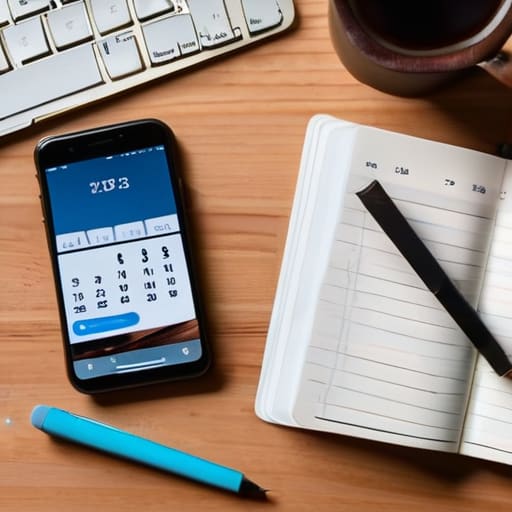
The sweet spot for me—and what actually helps with prioritizing tasks effectively—is finding a messy middle. I use a basic digital calendar for my hard appointments (because I need those pings to stay sane), but for my actual workflow, I go back to basics. I keep a single, unpretentious notebook on my desk for my daily brain dump. There’s something about the tactile act of physically crossing a line through a completed task that provides a dopamine hit no notification can replicate. You don’t need a complex system; you just need a way to capture the chaos without getting lost in the setup.
Daily Productivity Hacks for When Life Gets Loud

We’ve all been there: you wake up with a plan, but by 10:00 AM, the kids are sick, your inbox is exploding, and your “perfect” schedule has gone out the window. When things get chaotic, stop trying to force your original list to work. Instead, try a simplified version of the Eisenhower Matrix explained through a lens of survival rather than corporate efficiency. Forget the complex quadrants for a second; just look at your list and ask, “If I only do one thing today to keep my head above water, what is it?” Everything else is just noise until that one thing is done.
Another one of my favorite daily productivity hacks for high-stress days is the “Rule of Three.” When the noise gets too loud, I stop looking at my master list entirely. I grab a post-it note—because nothing is more intimidating than a digital screen full of red notifications—and I write down exactly three small, manageable tasks. That’s it. Once those are crossed off, I give myself permission to breathe. It’s about protecting your momentum rather than chasing an impossible standard of perfection. Small wins are what actually get you through the messy days.
5 ways to stop your to-do list from becoming a source of anxiety
- Stop the “everything is urgent” trap. If your list has 25 items on it, you don’t have a list; you have a wish list. Pick three “non-negotiables” for the day. If you do those three, you’ve won. Everything else is just a bonus.
- Group your tasks by “energy required” rather than just category. I have a “brain dead” list for when I’ve had too much caffeine and not enough sleep—things like folding laundry or clearing my inbox—so I don’t feel like a failure when my focus dips.
- Write tasks as actual actions, not vague concepts. “Project X” is a terrifying, looming cloud. “Email Sarah about the budget spreadsheet” is a thing you can actually do in ten minutes. Small, actionable verbs are your best friend.
- Build in a “buffer zone.” Life happens. The car won’t start, or a client calls with an emergency. If you schedule every single minute of your day, one tiny hiccup will wreck your entire momentum. Leave gaps. Let the day breathe.
- Do a weekly “brain dump” to clear the mental clutter. Every Sunday, I sit down with my coffee and write out every single thing swirling in my head—from “fix the leaky faucet” to “finish the Q3 report.” Getting it out of your brain and onto paper stops that low-level panic from following you around all week.
The TL;DR: Keeping it real when the to-do list fails
Stop chasing the “perfect” system. Whether it’s a $50 leather planner or a high-tech app, if you don’t actually use it when you’re stressed, it’s just expensive clutter.
Focus on the “Big Three.” Instead of writing a mile-long list that makes you feel like a failure by noon, pick three non-negotiables and call it a win if you hit them.
Build in “buffer time” for the chaos. Life happens—laundry piles up, clients call unexpectedly, or you just plain need a nap. A realistic list accounts for the mess, not just the ideal version of you.
The truth about your to-do list
A to-do list shouldn’t be a wishlist for a version of yourself that doesn’t exist; it should be a realistic map for the person you actually are on a Tuesday when the coffee runs out and the inbox is exploding.
Nadia Halloway
The Bottom Line

Look, we’ve covered a lot of ground, from choosing between the tactile feel of a notebook and the convenience of a dark-mode app, to managing those frantic days when everything hits the fan at once. The takeaway isn’t that you need to find the “perfect” system—because, let’s be honest, that thing doesn’t exist. The goal is simply to find a way to capture your tasks so they stop swirling around your brain like a caffeine-induced storm. Whether you’re using a high-tech digital tool or a scrappy piece of scrap paper, the most important thing is that your system is actually sustainable when you’re tired, stressed, or just plain busy.
At the end of the day, your to-do list is supposed to serve you, not the other way around. Don’t let a half-finished list or a missed habit make you feel like you’ve failed. Life is messy, and your productivity shouldn’t be a performance for anyone else. If you only get one thing done today, but it was the right thing, then you’ve won. Stop chasing the aesthetic of a perfectly curated life and just focus on making progress where it counts. You’ve got this.
Frequently Asked Questions
How do I stop my to-do list from becoming a giant, overwhelming mountain of tasks that I never actually touch?
The secret is to stop treating your list like a wish list and start treating it like a reality check. If everything is a priority, nothing is. I started using the “Rule of Three”: pick three non-negotiables for the day. Everything else goes into a separate “someday” bucket. It feels counterintuitive to leave tasks unwritten, but it’s better to finish three things than to stare at twenty and do absolutely nothing.
Is there a way to keep track of my list without constantly checking my phone and getting sucked into a social media rabbit hole?
The “phone trap” is real, and honestly, it’s the biggest productivity killer I know. If you use your phone for your list, you’re basically inviting every distraction in the world to your desk. My rule? Keep a physical “anchor” nearby—a tiny notebook or even a post-it note. If you must go digital, use a dedicated app with a clean, dark-mode interface, but keep your phone in another room or on “Do Not Disturb.” Out of sight, out of mind.
What do I do when I realize I've planned way too much for one day and I'm already halfway through my coffee?
First, put the coffee down and breathe. You’ve hit the “over-planning wall,” and trying to power through will just lead to burnout by 2 PM. Stop looking at the whole list; it’s a lie. Pick exactly two things that actually matter today—the stuff that’ll keep your world from spinning if it doesn’t get done. Everything else? Move it to tomorrow. Be ruthless. A finished two-item list beats a half-baked ten-item disaster every single time.
How can I separate the "stuff I should probably do" from the actual tasks that will help me move the needle?
Look, we’ve all been there: your list is twenty items long, but none of them actually matter. To fix this, I use a “Must vs. Maybe” filter. Before you add anything to your daily list, ask: “If I only did this one thing today, would I feel like I actually moved forward?” If the answer is no, it goes into a “Someday” folder. Keep your active list tiny. If it’s not moving the needle, it’s just noise.