
Productivity Strategies Tailored for Adhd Brains
I am so tired of seeing those “aesthetic” productivity reels where someone with a perfectly curated desk and a $50 linen planner explains how to fix your life. If you’ve ever tried to follow those hyper-organized systems only to end up staring at a pile of half-finished projects and a mounting sense of guilt, you know that most advice on productivity for ADHD is basically just expensive noise. We don’t need more color-coded tabs or complex digital ecosystems that take three hours to set up; we need ways to function when our brains decide to go on strike in the middle of a Tuesday.
I’m not going to give you a roadmap to perfection, because let’s be real: perfection is a lie that keeps us paralyzed. Instead, I want to share the small, messy systems I’ve actually used to keep my freelance business running without losing my mind. We’re going to skip the grand gestures and focus on low-friction habits—the kind of tiny, repeatable wins that actually work when your focus is flickering and your environment is a disaster. Let’s get into what actually moves the needle.
Ditch the Grand Plans for Adhd Friendly Task Management

I’ve spent way too many Sunday nights mapping out these gorgeous, color-coded master plans, only to stare at them on Monday morning with a total sense of paralysis. When you’re dealing with executive dysfunction strategies, a massive, intimidating to-do list isn’t a roadmap—it’s a threat. It triggers that immediate urge to shut down or pivot to something much more stimulating, like deep-cleaning the spice rack instead of doing your taxes.
Instead of trying to conquer a mountain of tasks, we need to lean into adhd friendly task management that actually respects how our brains work. This means breaking things down until they feel almost ridiculously small. Don’t write “Clean the Kitchen” on your list; that’s too vague and overwhelming. Write “Put three forks in the dishwasher.” It sounds silly, but it bypasses that mental friction and gives you a quick win.
When the momentum stalls—and it will—don’t beat yourself up for not being a productivity machine. Sometimes, the best way to get moving is to stop fighting your brain and try a body doubling technique, like hopping on a quick video call with a friend while you tackle that pile of laundry. It’s about finding those tiny, low-stakes ways to trick your brain into starting, rather than waiting for a burst of motivation that might never show up.
Managing Executive Dysfunction Strategies Without the Guilt

We need to talk about that heavy, sinking feeling in your chest when you know you should be doing something, but your brain just… won’t. That’s not laziness, and it’s definitely not a character flaw. It’s executive dysfunction, and the guilt that follows is often more exhausting than the actual task you’re avoiding. Instead of beating yourself up, I’ve learned to stop fighting my brain and start working around it. One of my favorite executive dysfunction strategies is to stop looking at the mountain and just look at the first pebble. If I can’t clean the whole kitchen, I’ll just commit to washing three spoons. That’s it. Usually, once the momentum starts, the paralysis breaks, but even if it doesn’t, at least I didn’t spend the afternoon spiraling into self-loathing.
Another thing that saved my sanity is leaning into what actually works for my neurodivergent brain, rather than what “should” work. If I’m struggling to focus, I try the body doubling technique—even if it’s just hopping on a video call with a friend or sitting in a busy coffee shop. Having another human presence nearby acts like an external anchor for my focus. It’s not about being perfect; it’s about finding those tiny, low-friction ways to nudge yourself forward when the mental fog rolls in.
Five Low-Stakes Hacks to Get You Moving
- Stop trying to “time block.” For most of us, seeing a calendar filled with rigid color-coded chunks feels like a prison sentence. Instead, try “task bundling”—pairing a boring necessity, like folding laundry, with something your brain actually wants, like a specific podcast or a really good cup of coffee.
- Use the “Body Doubling” trick without the awkwardness. If you can’t focus, hop on a video call with a friend where you both just work silently, or even just go sit in a busy cafe. Having another human in your peripheral vision acts like a weirdly effective social anchor for your brain.
- Lower the barrier to entry with “Micro-Wins.” If the thought of “cleaning the kitchen” makes you want to stare at a wall for an hour, tell yourself you’re just going to wash three spoons. Usually, once the friction of starting is gone, you’ll keep going—but if you stop at three spoons, that’s still a win.
- Create a “Doom Box” system for your physical clutter. When you’re overwhelmed by a messy desk or room, don’t try to organize it perfectly. Just sweep the random bits into one designated bin so your immediate workspace is clear. You can deal with the contents later, but right now, you need visual calm to think.
- Build a “Brain Dump” station that isn’t a fancy planner. Since I refuse to use anything without dark mode, I keep a simple, dark-themed notes app or a single physical notebook right next to my bed. The second a “don’t forget to buy milk” thought hits at 11 PM, get it out of your head and onto the paper so you can actually sleep.
The Low-Stakes Cheat Sheet
Stop trying to build a perfect system; just find one tiny, repeatable habit that survives your worst, most distracted days.
Forgive yourself when the executive dysfunction hits—guilt is just extra mental clutter that keeps you from starting again.
Focus on “good enough” progress over aesthetic perfection; a messy, completed task is infinitely better than a beautifully planned one that never happens.
## The Reality Check
“Stop trying to build a productivity system for the version of yourself that has it all together; build one for the version of you that’s currently staring at a pile of laundry and three half-finished projects, wondering where the day went.”
Nadia Halloway
Finding Your Own Rhythm
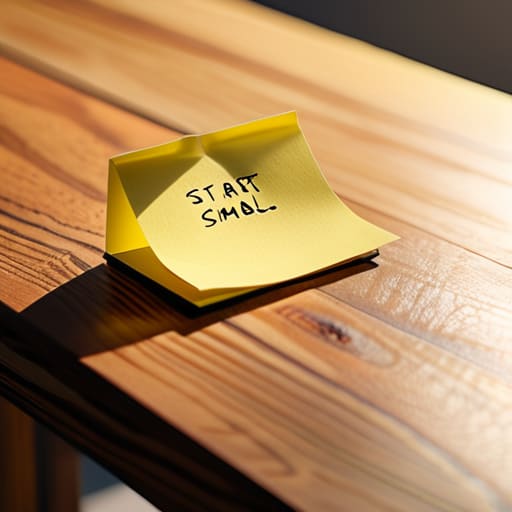
At the end of the day, we’ve covered a lot of ground—from ditching those intimidating, over-engineered planners to finding ways to navigate executive dysfunction without the crushing weight of shame. The takeaway isn’t that you need to overhaul your entire existence by Monday morning. It’s about recognizing that your brain works differently and that tiny, repeatable systems are infinitely more valuable than a perfectly curated, aesthetic workspace that you never actually use. Whether it’s a single sticky note or a low-friction digital tool with a dark mode you actually like, the goal is to lower the barrier to entry so you can actually get moving.
Please, give yourself some grace when things inevitably get messy. There will be days when your systems fail, your focus drifts, and you feel like you’re back at square one. That’s not a failure; it’s just life happening. Productivity isn’t a straight line upward, and it certainly shouldn’t be a source of constant self-flagellation. Focus on the small wins, keep your tools simple, and remember that progress is rarely linear. You don’t need to be perfect to be effective; you just need to keep showing up for yourself in ways that actually feel sustainable.
Frequently Asked Questions
How do I stop feeling like a failure when I inevitably break my new routine?
Look, I’ve been there. You set a perfect morning routine, and by Tuesday, you’ve missed three days and feel like you’ve completely failed. But here’s the truth: a routine isn’t a glass vase; it’s more like a rubber band. It’s meant to stretch and snap back. When you break it, don’t scrap the whole system. Just pick one tiny, low-effort thing to do right now. Perfection is the enemy of progress.
Are there any low-cost or free tools that don't feel like they're just more "aesthetic clutter"?
Look, I’m the first person to roll my eyes at those hyper-aesthetic, color-coded planners that end up just becoming expensive clutter. If it takes more energy to maintain the “look” than it does to do the work, it’s useless. For me, it’s all about the basics. I swear by simple, dark-mode-enabled tools like Google Keep for quick brain dumps or a plain old physical notepad. Keep it ugly, keep it functional, and keep it free.
What do I do when I'm stuck in a "doom scroll" and can't physically make myself get up?
The “doom scroll paralysis” is real, and honestly, beating yourself up about it just makes the paralysis heavier. When I’m stuck, I stop trying to “be productive” and instead aim for a “micro-movement.” Don’t try to clean the kitchen; just try to put your phone on the charger in the other room. Once the physical tether is broken, the momentum usually follows. Aim for one tiny, low-stakes win to reset your brain.
How can I manage my energy levels when my focus seems to vanish halfway through the day?
Stop trying to power through the slump with more caffeine; it usually just leads to a crash and a side of guilt. Instead, I’ve learned to stop fighting my natural rhythm. When that focus vanishes, it’s usually a signal, not a failure. Try a “low-power mode” task—something mindless like clearing your inbox or organizing a drawer—instead of forcing a deep-work session. Work with your energy, not against it.